Stoovo
Led the 0 → 1 launch of a two-sided delivery marketplace
Enabling small businesses and gig drivers to exchange parcels across California.
Designed both sides of the platform — customer ordering and courier workflows — under tight constraints and limited resources.
Context
Stoovo already had an existing base of gig workers. The opportunity was to expand into last-mile delivery by activating that supply and introducing demand from small businesses and individuals.
This required designing:
- A customer-facing ordering experience
- A courier-facing execution system
Essentially, building a marketplace from scratch.
What made this challenging
This wasn't a typical feature — it was a system with multiple dependencies:
Two-sided complexity
Supply (drivers) and demand (orders) had to work seamlessly together
Time-sensitive interactions
Couriers operate in motion — decisions must be instant and clear
Unpredictable real-world conditions
Deliveries depend on humans, locations, timing, and edge cases
Limited resources & time
No extensive research infrastructure or large team
The challenge was not just UI — it was designing a working system under uncertainty
My role
Owned end-to-end product design:
- Defined core flows for both sides of the marketplace
- Translated ambiguous requirements into structured product decisions
- Collaborated directly with CEO and engineers
- Designed, validated, and shipped the full experience
Key product decisions
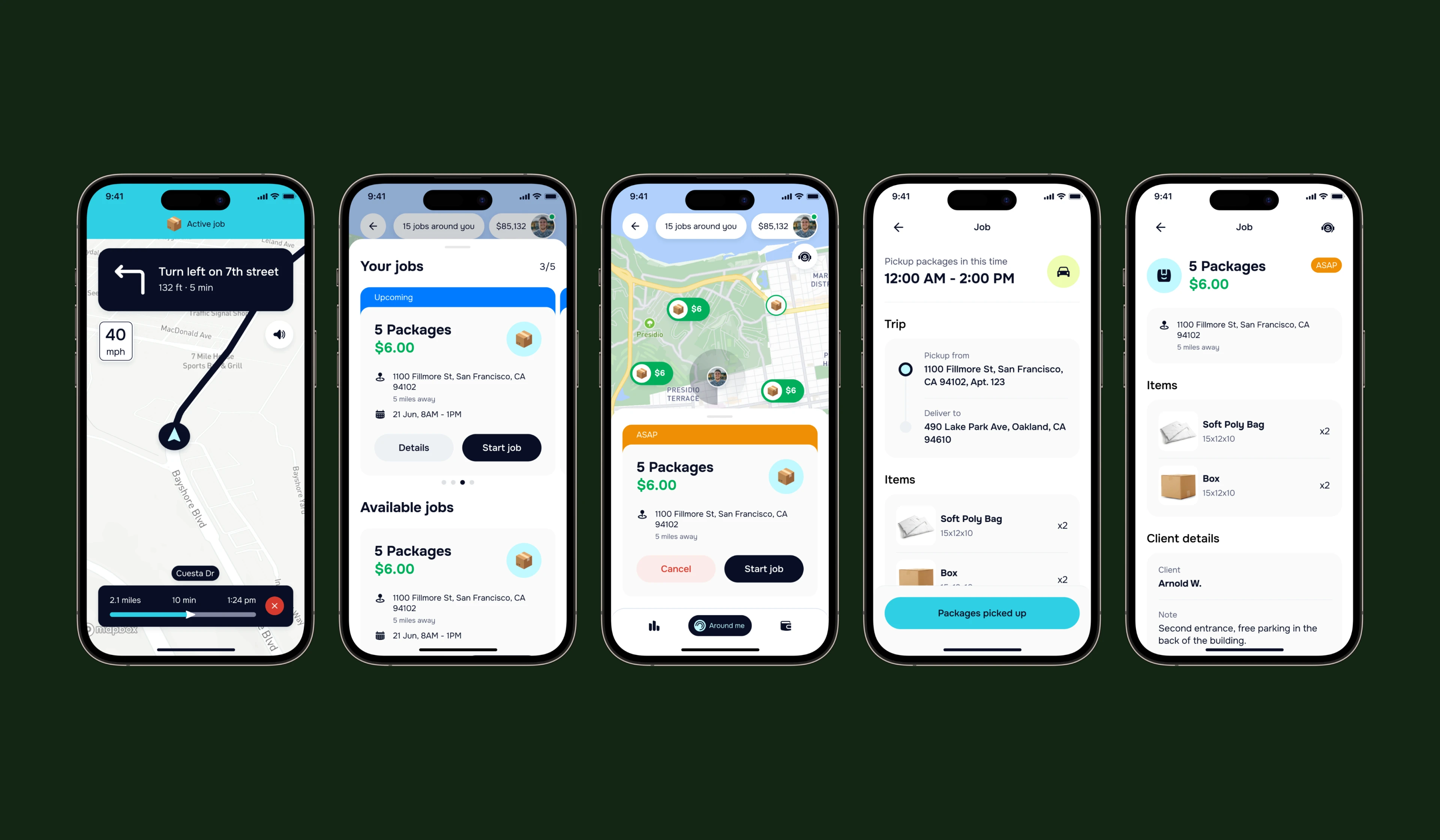
1. Prioritized speed over flexibility (courier side)
Couriers don't explore interfaces — they act quickly.
Designed:
- Large, high-contrast UI elements
- Minimal decision points
- Clear hierarchy focused on time and earnings
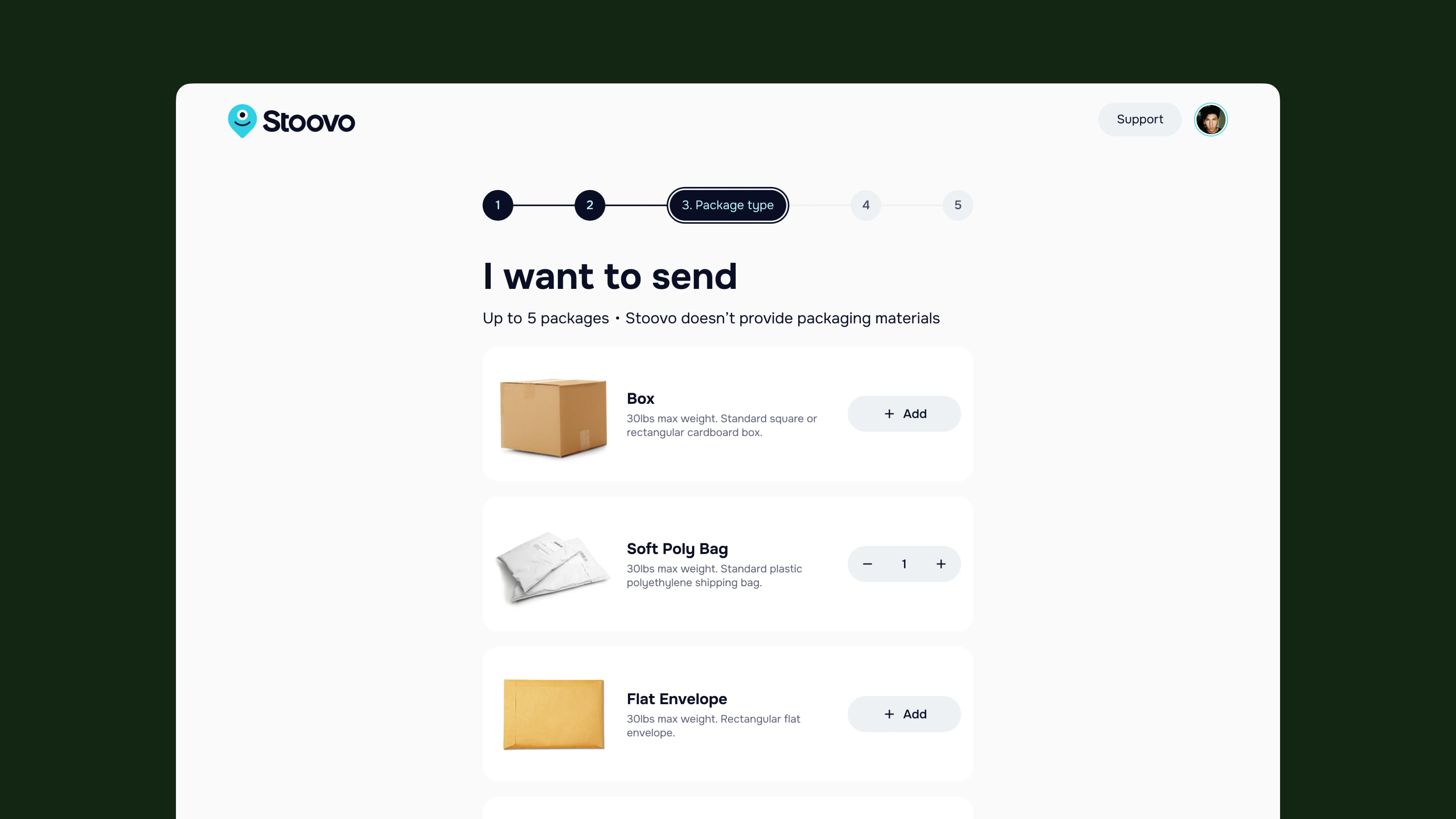
2. Simplified the delivery flow into clear steps
The system involved multiple actors: sender, courier, receiver, and platform.
Mapped the full journey and reduced it into:
- Discrete, predictable steps
- Each with clear ownership (user vs system)
This reduced confusion and made the system scalable.
3. Designed for real-world usage, not ideal scenarios
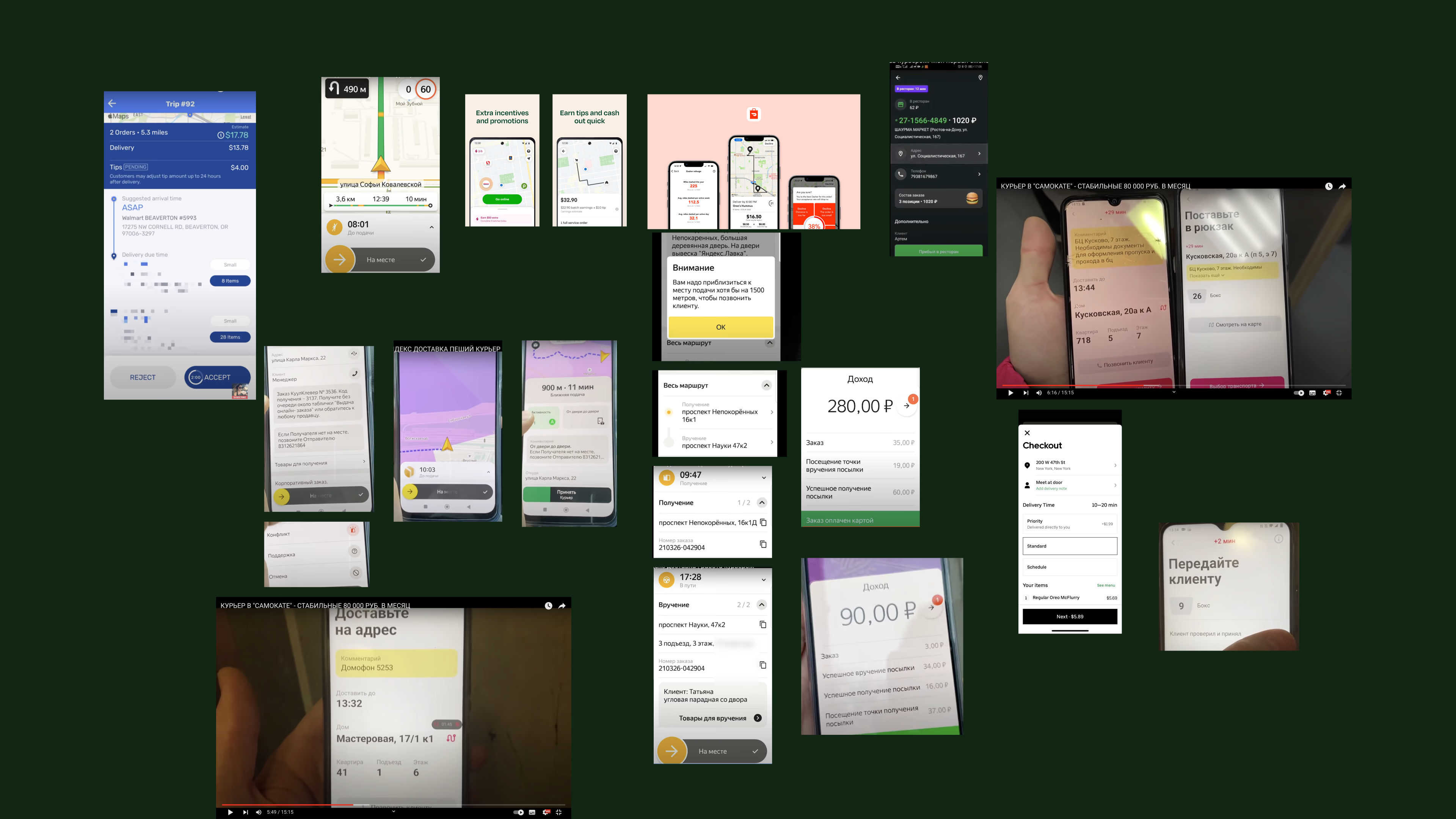
Instead of relying only on formal research, studied real courier behavior:
- Videos of drivers using apps
- Forums and communities
- Observed patterns in how they interact under pressure
Courier apps succeed when they are fast, obvious, and forgiving
4. Leveraged existing design system to move fast
Skipped unnecessary low-fidelity stages and:
- Reused proven components
- Focused effort on flow and logic
This allowed rapid iteration without sacrificing clarity.
Execution
- Designed full customer ordering experience
- Designed courier interface and delivery flow
- Aligned flows with engineering constraints early
- Iterated based on feedback from real usage scenarios
Outcome
Successfully launched Stoovo's delivery service in California
Enabled existing gig workers to participate in a new revenue stream
Delivered a fully functional two-sided system under tight constraints
Adopted by an early cohort of 100 active drivers, validating the marketplace model
What I'd improve next
- Optimize supply-demand matching logic
- Introduce dynamic pricing / incentives
- Improve real-time tracking transparency
- Expand onboarding to reduce friction for new couriers